The first day after treatment requires protection from numbness, pressure and damage to the temporary filling. You will know what to eat, how to manage discomfort, when to arrange the permanent restoration and which symptoms require prompt dental or emergency attention.
Key takeaways
- Wait until numbness completely wears off before chewing.
- Choose soft foods and avoid biting on a temporary filling.
- Arrange the permanent restoration without unnecessary delay.
- Call a dentist if pain worsens or the temporary filling breaks.
Your first 24 hours: protect the tooth while your mouth is numb
Do not chew until the local anaesthetic has completely worn off. Numb lips, cheeks and tongues are easy to bite, while hot food or drinks can burn you without causing immediate pain.
For the first 24 hours, protect the temporary filling and the treated tooth:
- Wait until normal sensation returns before eating.
- Choose soft, lukewarm food and chew on the opposite side.
- Avoid hard, sticky or crunchy foods that can dislodge or crack the temporary filling.
- Take prescribed medicines exactly as instructed, considering your other medicines and medical conditions.
- If you miss a dose, follow the prescription instructions or call the dental clinic; do not double the next dose unless told to do so.
- Never place aspirin directly on the gum. It can cause a chemical burn.
- Brush and clean between your teeth normally, using a gentle touch around the treated tooth unless your clinician gave site-specific instructions.
Mild tenderness when biting can begin as the numbness fades. Keep the temporary restoration clean and check it with your tongue, but do not repeatedly press or pick at it.
For anyone searching what to do after advanced root canal in Diva, the key decision is simple: protect the tooth until review and arrange help promptly if the filling feels loose or your bite feels suddenly high.
Seek urgent dental or medical assessment for increasing facial swelling, fever, marked illness, difficulty opening your mouth, swallowing or breathing. Difficulty breathing or swallowing is an emergency.
Pain, tenderness and the normal recovery timeline
Mild tenderness when biting and soreness around the treated tooth are common during advanced root canal recovery. They often peak after the anaesthetic fades, then improve over the next two to three days. Inflammation or infection present before treatment can make the tooth tender for longer, but the trend should be toward improvement, not worsening.
During the first day, use the pain medicine prescribed or recommended by your dentist exactly as directed. If you miss a dose, follow the medicine label; take it when remembered unless the next dose is due, and never double the dose without specific instructions.
Do not place aspirin or another tablet directly on the gum, because it can cause a chemical burn. Antibiotics are not routine painkillers or a substitute for root-canal treatment; a dentist decides on them when fever, marked illness or spreading infection is present.
- Pain is severe, worsening or not settling.
- The tooth feels high when you bite; a small bite adjustment may be needed.
- Facial swelling is increasing.
- You develop fever or feel markedly unwell.
- You cannot open your mouth normally.
- You have difficulty swallowing or breathing.
Difficulty breathing or swallowing is an emergency. Seek urgent medical help rather than waiting for a routine review. Continue gentle brushing and cleaning between the teeth unless your clinician gives a site-specific restriction.
Eating, brushing and dealing with a temporary filling
Do not chew until the local anaesthetic has completely worn off. During root canal recovery in Diva, numb lips, cheeks and tongues are easy to bite, while hot food or drinks can burn you without warning. Once sensation returns, chew on the opposite side and choose soft, lukewarm food until the tooth feels comfortable.
Keep these away from the treated tooth while the temporary filling is in place:
- Hard foods such as nuts, ice and popcorn kernels
- Sticky foods such as toffee, caramel and chewing gum
- Very chewy foods such as tough meat or crusty bread
Brush twice daily with a soft-bristled toothbrush, including the treated tooth and the gum around it, unless your dentist gave a site-specific restriction. Use gentle pressure rather than scrubbing over the temporary filling.
Clean between the teeth as usual, but guide floss down and pull it out sideways instead of snapping it upward; lifting it can loosen the filling.
A temporary filling seals the access opening but is not a permanent restoration. Check it with your tongue, not by picking at it. If it feels loose, falls out or leaves a sharp edge, stop chewing on that side and contact the treating dentist.
Plaque around a damaged filling can allow leakage and new decay, so arrange the permanent restoration promptly.
Why the permanent restoration cannot wait
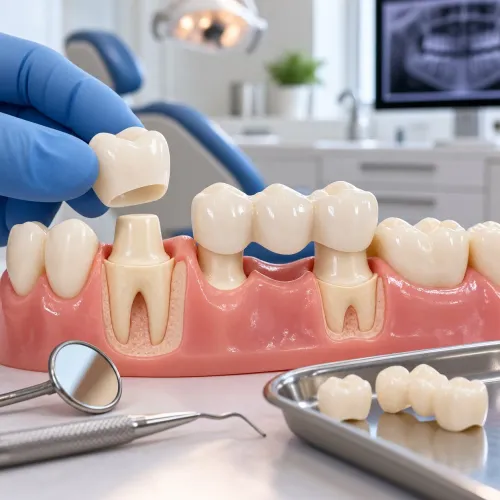
Arrange the final filling, onlay or crown at the review time given by your dentist, and do not leave the temporary filling in place longer than advised. A temporary restoration seals the tooth for a limited period; it is not designed to provide the strength or long-term seal of the definitive restoration.
- Ask which restoration is planned and when it should be placed. A back tooth with substantial structure removed often needs cuspal coverage from an onlay or crown because the remaining walls can fracture under chewing pressure. A filling may be suitable when more tooth structure remains, while a front tooth does not automatically require a crown.
- Keep the appointment even if the tooth feels comfortable. Root canal treatment removes infection from the canals, but decay, a loose restoration or a crack can let bacteria enter again. A permanent restoration closes the access and helps protect the tooth from leakage.
- Until it is fitted, chew on the opposite side and avoid hard, sticky or very chewy foods. Heavy biting can dislodge the temporary filling or split the weakened tooth; once the seal is lost, saliva and bacteria can reach the treated area.
- Contact the treating dentist if the temporary filling feels loose, a piece breaks away, or your bite feels high or painful. A prompt adjustment or replacement can prevent further damage while you wait for the final restoration.
When to call a root canal aftercare dentist in Diva
Mild soreness around the tooth, tenderness when biting and slight gum sensitivity can occur during the first few days. These symptoms should gradually improve, not intensify. A bite that feels high or uneven is not something to “wait out”; contact the treating dentist because the tooth may be taking excessive pressure.
| Symptom or finding | What it usually means | What to do |
|---|---|---|
| Mild pain or biting tenderness that is improving | Routine healing | Follow the prescribed pain-relief plan and monitor it |
| Temporary filling feels rough but remains sealed | Usually not urgent | Mention it at the scheduled review |
| Filling or crown is loose, cracked or missing | Bacteria can re-enter the tooth | Call the treating dentist promptly; do not chew on that side |
| Increasing facial or gum swelling, fever or marked malaise | Possible spreading infection | Seek urgent dental assessment the same day |
| Difficulty opening your mouth or swallowing | Infection may be extending beyond the tooth | Contact urgent dental or medical services immediately |
| Difficulty breathing | Airway emergency | Call emergency services now |
When choosing Sai Dental, Implant And Orthodontic clinic or another root canal aftercare dentist in Diva, ask whether your restoration is intact, whether the bite is comfortable, when review is due and which symptoms require an urgent call.
Give the dentist your full medical history and current medicines before taking antibiotics or stronger pain medicine; do not self-start antibiotics.
Related service
Advance Root Canal An advanced root canal procedure, often referred to as endodontic treatment, is a dental procedure performed to treat infection or damage deep within... View service → |
Frequently asked questions
When can I eat after an advanced root canal?
Wait until the local anaesthetic has completely worn off before chewing. Numb lips, cheeks and tongues are easy to bite, and hot food or drinks can cause burns.
How long does root canal recovery take?
Tenderness around the treated tooth is part of recovery. Follow your dentist’s instructions and contact a root canal aftercare dentist in Diva if pain worsens instead of settling.
What should I do if I have a temporary filling?
Eat carefully, avoid putting unnecessary pressure on the treated tooth and keep brushing gently. Contact your dentist if the temporary filling loosens or falls out.
Why is the permanent restoration important after a root canal?
A permanent restoration protects the treated tooth during normal chewing. Arrange it promptly rather than leaving the tooth supported only by a temporary filling.
Keywords