A quoted crown or bridge fee does not always cover every stage, material, scan, temporary restoration or repair. By comparing the clinical assessment, restoration design, preparation, laboratory work, fitting and follow-up, you can ask a dentist in Diva exactly what your treatment includes and whether it suits your teeth.
Key takeaways
- Ask what material, design and temporary restoration your treatment includes.
- Confirm your gums, supporting teeth and bite are ready before preparation.
- Expect impressions or scans, a temporary restoration and a fitting appointment.
- Clarify cleaning instructions, exclusions and warning signs before treatment.
What should a ceramic crown or bridge appointment include?
A complete appointment plan for ceramic crown and bridge in Diva should cover the treatment process, not only the final ceramic restoration.
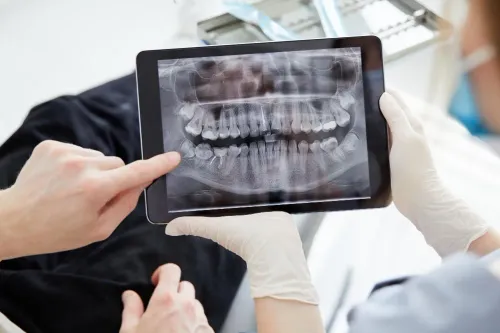
- Examination: Check the remaining tooth structure, roots, gums, bone support, decay and bite forces. Take appropriate dental X-rays; CBCT is case-dependent, not automatic.
- Preparation: Explain tooth shaping, local anaesthetic and whether a core build-up, post, extraction or root-canal treatment is needed. Root-canal treatment is separate unless the pulp is diseased or at significant risk.
- Temporary restoration: Provide a provisional crown or bridge while the laboratory makes the definitive restoration, and state its material, expected duration and fee inclusion.
- Records: Take an intraoral digital scan or physical impression and record the tooth shade.
- Laboratory work: Identify the laboratory fabrication stage and expected waiting period.
- Fitting: Include a try-in to check fit, contacts, shade and bite, followed by adjustment and final cementation or bonding.
- Follow-up: Confirm review visits, cleaning advice, temporary loosening instructions, and the terms for repairs, remakes or warranty coverage.
Ask for the full number of visits and every separate charge in writing. A crown or bridge has no guaranteed lifespan, so follow-up depends on hygiene, gum health, grinding, material and supporting teeth.
How does a crown differ from a tooth-supported or implant-supported bridge?
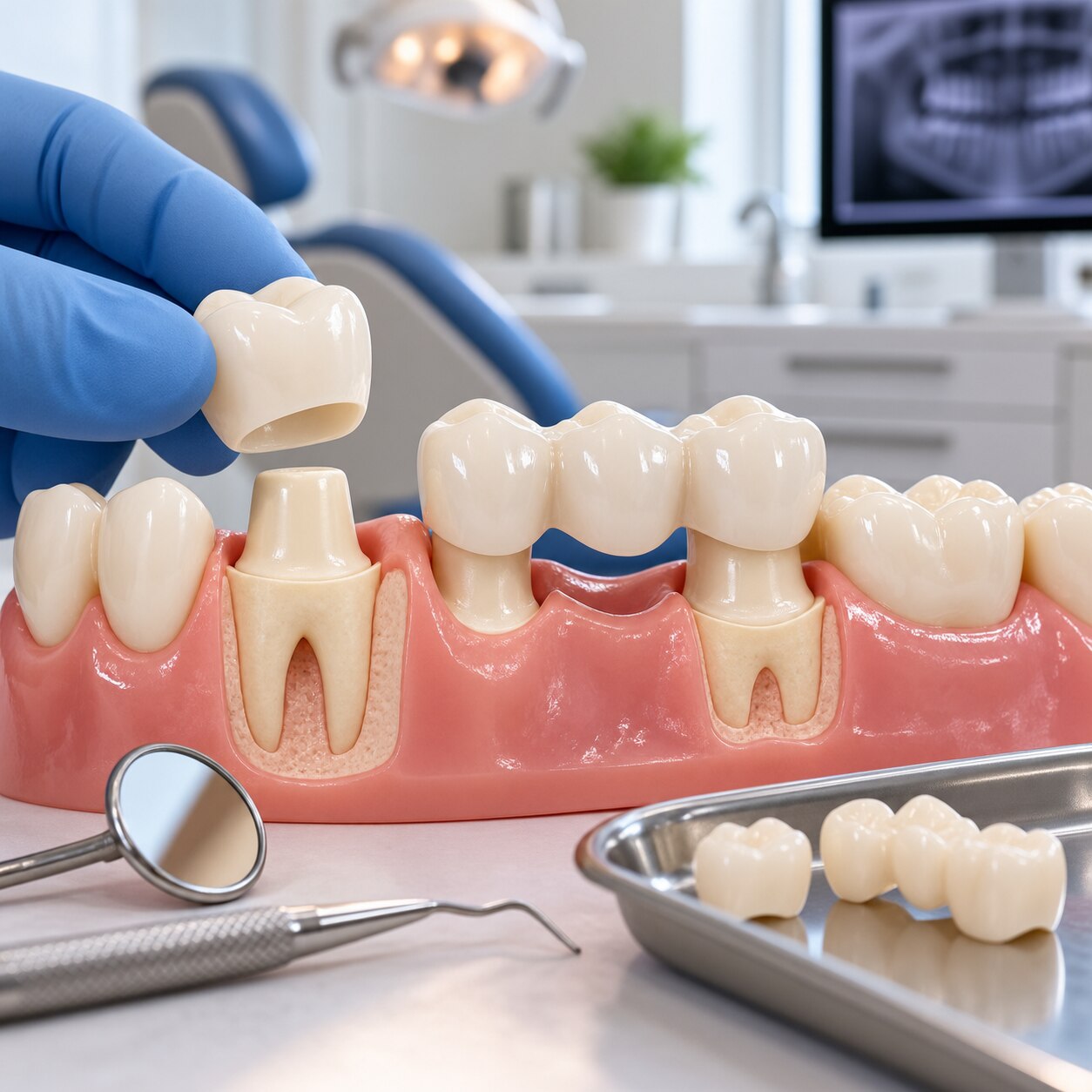
A ceramic dental crown in Diva covers one prepared tooth or one implant abutment. It restores a single site rather than spanning a gap. A bridge replaces a missing tooth with a pontic, supported by neighbouring teeth, retainer wings, or dental implants.
| Restoration | What supports it | What is prepared or placed |
|---|---|---|
| Crown | One natural tooth or implant abutment | The tooth is shaped, or an implant receives an abutment and crown |
| Tooth-supported bridge | Teeth beside the gap, or one tooth in a cantilever design | Supporting teeth receive crowns; a Maryland bridge uses retainer wings |
| Implant-supported bridge | Two or more dental implants and their abutments | Implants, connectors and pontics support the replacement span |
A conventional bridge needs sound abutment teeth on one or both sides of the gap. Preparing those teeth removes healthy enamel and creates a shared restoration, while a Maryland bridge preserves more tooth structure but depends on reliable bonding.
An implant-supported bridge does not mean “a bridge fitted onto existing teeth.” Implant placement, bone grafting, healing time and implant components are separate treatment stages and are not automatically included in a ceramic bridge quotation. Ask which design is proposed, how many pontics it contains, and what supports each end.
Which ceramic material and bridge design suits your teeth?
The right restoration balances appearance against load: a highly translucent material may look natural, while a longer bridge or heavy bite demands greater strength and support. Ask the ceramic bridge dentist in Diva to explain how tooth position, available thickness, opposing teeth and replacement span affect the recommendation.
| Material | Strength and appearance | Suitable use and main caution |
|---|---|---|
| Lithium disilicate | High translucency with good strength | Front crowns and shorter bridges; needs adequate thickness and can chip under heavy loading |
| Feldspathic porcelain | Excellent translucency and fine shade detail | Thin front veneers or crowns with low bite forces; least suitable for long spans or grinding |
| Zirconia | Very high strength with lower translucency in some grades | Back crowns and longer spans; ask about the selected grade and surface finish |
| Porcelain-fused-to-metal | Strong metal framework with a porcelain outer layer | Bridges and high-load areas; the framework can limit translucency and porcelain can chip |
A bridge design also matters. One missing tooth may use crowns on neighbouring teeth, retainer wings, or implant abutments; a longer span increases bending and load on each support. If grinding, weak abutments or limited thickness is present, a shorter bridge or implant-supported design may reduce fracture and retention risks.
Is the tooth and gum condition suitable for a crown or bridge?
A crown or bridge is suitable only when the tooth, supporting tissues and bite can carry it safely; crown and bridge treatment in Diva should begin with that assessment, not with ceramic selection.
1. Check the remaining tooth structure. A tooth with enough sound walls can support preparation; a badly broken tooth may need a core build-up or extraction instead.
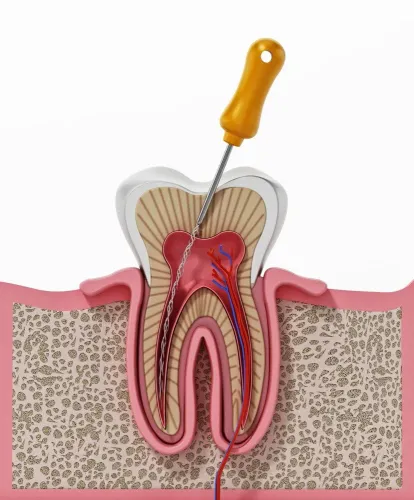
2. Check the roots and pulp with examination and appropriate dental X-rays. Root-canal treatment is not automatically included. It is needed when the pulp is diseased or preparation puts it at significant risk.
3. Assess gum stability and decay. Bleeding gums, deep pockets or untreated decay can cause marginal leakage, recurrent decay and bridge failure.
4. Assess bone support and the proposed abutment teeth. A tooth-supported bridge needs strong support beside the gap; an implant-supported option requires separate implant planning and adequate bone.
5. Check grinding, clenching and bite forces. Heavy loading increases chipping, fracture, loosening and pain, so the plan may need protection or a different replacement.
6. Clarify any post separately. A post retains a core inside a root; it does not reinforce the root or crown and can complicate future retreatment.
How many visits does crown and bridge treatment take in Diva?
Many ceramic crown and bridge cases in Diva need two or three clinical visits, plus the laboratory waiting period. The exact number rises if the restoration needs a second trial for fit, shade, contacts or bite.
1. Examination visit: The dentist checks the tooth, gums, bone support, remaining structure and bite, then takes appropriate dental X-rays. A CBCT scan is case-dependent, not an automatic part of every plan.
2. Preparation visit: Local anaesthetic is used before shaping the tooth or abutments. The dentist records the restoration with an intraoral digital scan or physical impression, selects the shade, and places a temporary crown or bridge for protection.
3. Laboratory stage: The laboratory fabricates the definitive ceramic restoration. Ask for the expected waiting period, because the temporary restoration must remain in place until the laboratory work returns.
4. Fitting visit: The dentist tries in the crown or bridge, checks margins, contacts, shade and occlusion, makes adjustments, and then completes final cementation or bonding.
For crown and bridge treatment in Diva, Sai Dental, Implant And Orthodontic clinic should state which visits, temporary restoration, laboratory work and follow-up are included in the written plan.
Related service
Ceramic crown & Bridge Ceramic Crown: A dental crown is a tooth-shaped cap that is placed over a damaged or decayed tooth to restore its shape, size, strength, and... View service → |
What care, exclusions and warning signs should you clarify before treatment?
Before accepting a plan, ask what happens after cementation, not only what ceramic is being fitted. A ceramic dental crown in Diva covers one prepared tooth or implant abutment; a bridge adds a pontic, so cleaning and failure terms differ. Ask the ceramic bridge dentist in Diva to state these points in writing:
1. Cleaning: Confirm how to clean the crown margins and beneath each pontic using a floss threader, superfloss, interdental brush or water flosser. Brushing alone leaves plaque against the tissue.
2. Temporary loosening: Ask what to do if the provisional or final restoration moves. Save the piece, avoid chewing on that side, and call the clinic; do not use household glue.
3. Follow-up: Confirm the review date, adjustment visits and who pays if your bite feels high, the gum stays sore or the restoration causes sensitivity.
4. Repairs and remakes: Check the written warranty, exclusions and charges for ceramic chipping, debonding, fracture, remake or laboratory error. No crown has a guaranteed service life.
5. Suitability: Severe gum disease, active decay, untreated grinding, weak abutments or a long bridge span can make ceramic unsuitable. Warning signs include worsening pain, swelling, bleeding, bad taste, cracks or mobility; report them promptly.
Frequently asked questions
What should a ceramic crown or bridge appointment include?
Ask for an examination, X-rays when needed, treatment options, tooth preparation, impressions or a digital scan, a temporary restoration, ceramic fabrication and a final fitting with bite checks.
How does a crown differ from a tooth-supported or implant-supported bridge?
A crown covers one prepared tooth or implant. A tooth-supported bridge replaces a missing tooth using neighbouring teeth as supports, while an implant-supported bridge uses dental implants instead of natural abutment teeth.
Which ceramic material and bridge design suits your teeth?
The choice depends on tooth position, bite force, appearance, span length, available space and supporting teeth. Ask why the dentist recommends a specific ceramic and design for your case.
How many visits does crown and bridge treatment take in Diva?
Treatment commonly involves an examination, preparation and scan or impression, followed by a fitting visit after the laboratory restoration is ready. Additional visits are needed for gum treatment, root canal care or adjustments.
What care, exclusions and warning signs should you clarify before treatment?
Confirm cleaning methods, foods to avoid, warranty or remake terms and follow-up arrangements. Report persistent pain, swelling, a loose restoration, a sharp edge or a bite that feels high.
Keywords