A broken tooth is not automatically a tooth that must be removed. The decision depends on where the fracture runs, how much sound tooth remains, whether the root and supporting bone are healthy, and whether the tooth can be sealed reliably after treatment. By the end, you will know which findings point to a filling, crown or root canal, which call for surgical removal, and which symptoms need urgent care.
Key takeaways
- Fractures below the gum line often require surgical access.
- Dentists assess remaining tooth structure, roots, infection, and restorability before extraction.
- Severe swelling, fever, uncontrolled bleeding, or breathing difficulty needs urgent assessment.
- Increasing pain after initial improvement can signal infection or dry socket.
Which broken teeth are most likely to need surgical extraction?
Surgical tooth extraction for a broken tooth in Diva becomes more likely when the fracture leaves no reliable grip or seal. A tooth fractured below the gum line may leave too little structure for forceps, while a crown that breaks away can leave roots that are either usable or difficult to access.
| Fracture pattern | Why it matters | Likely treatment direction |
|---|---|---|
| Below-gum fracture or retained fragment | Little structure remains for forceps; debris can stay trapped | Surgical access and fragment removal |
| Vertical root fracture | A single-rooted tooth is usually non-restorable | Remove the tooth; in a multi-rooted tooth, remove only the affected root if the rest is sound and restorable |
| Split tooth or limited-access root | Separate segments, curved roots, fusion or dense bone make removal difficult | Surgical extraction rather than simple forceps removal |
A crown crack is different from a fractured root. A nonpainful, uncomplicated crown fracture may be monitored, bonded, filled or restored; if the pulp is exposed, root-canal treatment followed by a crown may preserve it. The central test is restorability and predictable sealing, not simply how much visible crown is missing.
For tooth extraction for damaged tooth in Diva, ask whether sound structure remains above the gum and whether the roots can be reached safely. Extraction is more likely when fragments lie below the gum, the tooth is split into separate segments, or root access is limited.
How does a dentist decide whether to save or remove the tooth?
Visible damage alone cannot decide whether to save or remove a tooth. A hidden root fracture, pulp exposure or infection, bone loss, a fragment below the gum, or damage concealed beneath an old filling or crown can change the plan.
A crown may look repairable while its root is split; a badly broken crown may still leave enough sound structure for restoration.
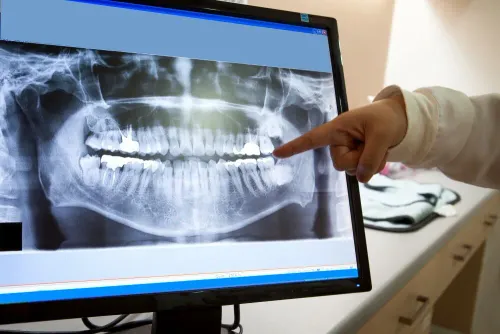
In Diva, the dentist will ask when and how the injury happened, whether pain or sensitivity followed, and whether symptoms have worsened. The examination includes the gum, tooth mobility and bite, followed by periapical dental radiographs to locate roots, retained pieces and infection.
The decision depends on:
- The fracture’s depth and direction, pulp condition, and how much sound tooth remains above the gum
- Periodontal support, surrounding bone, root shape and access
- Occlusion, meaning whether biting forces would overload the repair
- Whether the tooth can be sealed and restored predictably
A small crown fracture without pulp involvement may suit bonding or a filling. If the pulp is exposed or infected and enough structure remains, root-canal treatment followed by a crown can preserve the tooth.
Too little sound structure, poor support or an unmanageable fracture makes restoration unreliable, supporting broken tooth extraction in Diva rather than repair.
If two-dimensional images do not show the fracture or its relationship to the maxillary sinus or a nerve clearly, three-dimensional imaging can be considered. Sai Dental, Implant And Orthodontic clinic can provide the assessment needed before deciding on tooth extraction for damaged tooth in Diva.
Related service
Dental Surgical Extraction A dental surgical extraction is a procedure performed by a dentist or oral surgeon to remove a tooth from the mouth. View service → |
What makes removal complex, and what happens during the procedure?
A tooth can need complex tooth removal in Diva because access is difficult, even when the visible damage looks moderate.
Problems include a crown fractured away with little forceps grip, a root broken below the gum, curved or widely divergent roots, root fusion, dense bone, ankylosis, a brittle previously root-treated tooth, limited mouth opening, or proximity to the maxillary sinus, inferior alveolar nerve, mental nerve or lingual nerve.
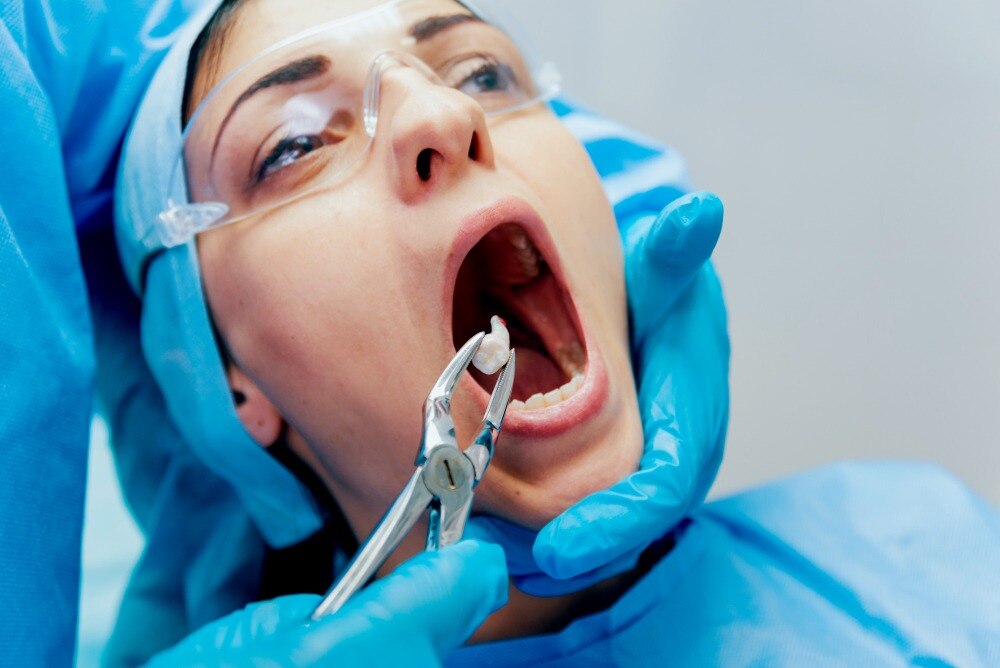
Surgical tooth extraction for broken tooth in Diva normally follows a planned sequence:
- Local anaesthetic is given; you should feel pressure and movement, not sharp pain.
- The dentist makes a gum incision and lifts a flap when direct access is inadequate.
- A small amount of surrounding bone is removed if it blocks the root.
- The tooth or roots are sectioned when removing them as one piece would damage bone or nearby structures.
- Fragments are removed, the socket is cleaned, and sutures are placed when required.
| Option | Access and tissue handling | Procedure length, stitches and recovery |
|---|---|---|
| Simple extraction | Forceps reach enough sound tooth for controlled removal, with limited tissue handling | Usually shorter, often no stitches, and lighter recovery demands |
| Surgical removal | Requires a flap, bone removal or sectioning before fragments can be removed | Takes longer without a fixed duration, may need stitches, and usually demands more careful recovery |
Referral or sedation should be discussed for severe anxiety, medical complexity, difficult access, high-risk anatomy, or a case beyond the operator’s surgical experience. A root near a nerve or the maxillary sinus may warrant an oral surgeon’s assessment rather than an attempted removal.
When does a broken tooth need urgent assessment rather than a routine appointment?
Uncontrolled bleeding, facial swelling, fever, pus, malaise or rapidly worsening severe pain needs urgent dental assessment. Difficulty opening your mouth also raises concern. Do not wait for a routine restorative or cosmetic visit if swelling is spreading toward the eye or neck, or if you have trouble swallowing or breathing: infection can threaten the airway.
Seek help at the right level:
- Contact an urgent dentist promptly for bleeding that will not stop with firm gauze pressure, worsening pain, pus, fever or facial swelling.
- Go to emergency care for breathing or swallowing difficulty, swelling near the eye or neck, or rapidly increasing swelling.
- Do not assume antibiotics solve the problem. They do not remove a broken tooth or its infected source and are not routinely needed after every extraction. Dentists reserve them for selected spreading or systemic infections, or specific medical indications.
Before broken tooth extraction in Diva, ask about bleeding, infection, delayed healing, damage to neighbouring teeth or restorations, retained or displaced fragments, and temporary or persistent nerve disturbance. Risk depends on root position, root shape, surrounding bone, surgical access and your general health—not every tooth extraction for damaged tooth in Diva carries the same risk.
A root near a nerve or sinus may justify referral.
What recovery signals are normal, and when should you contact the dentist?
Pain and swelling commonly increase during the first two to three days after surgical tooth extraction for broken tooth in Diva, then begin to improve. Recovery takes longer when bone was removed, roots were sectioned, sutures or a bone graft were used, or your general health slows healing.
1. Bite on gauze for the time your clinician specified. Avoid vigorous rinsing and spitting during the first day, do not smoke, and follow the prescribed cleaning instructions. Graft sites and sutures can require different care, so use your dentist’s directions rather than a generic online routine.
2. Arrange a review if severe throbbing pain starts or worsens several days after removal, especially with an unpleasant taste, bad odour or an apparently empty socket. These signs can indicate dry socket. Smoking and disturbing the blood clot increase the risk.
3. Contact the dental team promptly for persistent bleeding, increasing swelling, fever, numbness or difficulty swallowing. Seek emergency care for difficulty breathing or swelling extending towards the eye or neck.
After complex tooth removal in Diva, healing demands reflect the procedure and your health, not just the visible break. A surgical extraction is justified when the tooth cannot be predictably restored or safely removed through simple access; a restorable tooth deserves discussion of preservation first.
Frequently asked questions
Which broken teeth are most likely to need surgical extraction?
A tooth is more likely to need surgical extraction when it breaks below the gum line, leaves no usable grip, has curved or separated roots, or has extensive decay and infection.
How does a dentist decide whether to save or remove a broken tooth?
The dentist examines the fracture, remaining enamel and dentine, root condition, infection, gum support, bite forces, and whether a dependable restoration can seal and strengthen the tooth.
What makes removal complex, and what happens during the procedure?
Limited access, a buried fracture, brittle tooth structure, curved roots, dense bone, or nearby nerves can make removal complex. The dentist numbs the area, opens access when needed, separates the tooth or roots, removes them, cleans the socket, and places stitches when required.
When does a broken tooth need urgent assessment rather than a routine appointment?
Seek urgent assessment for facial swelling, fever, spreading redness, severe pain, uncontrolled bleeding, difficulty swallowing or breathing, or an injury that exposes the pulp.
What recovery signals are normal, and when should you contact the dentist?
Mild bleeding, tenderness, swelling, and jaw stiffness are expected after extraction. Contact the dentist if pain worsens after improving, swelling expands after two days, fever develops, bleeding persists, or the socket has a bad taste or odour.
Keywords