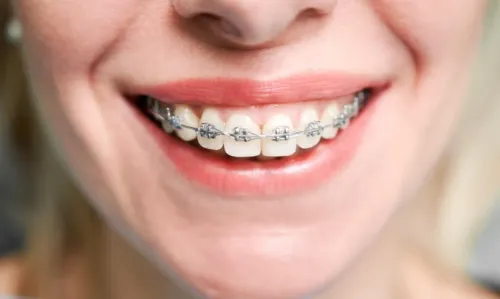
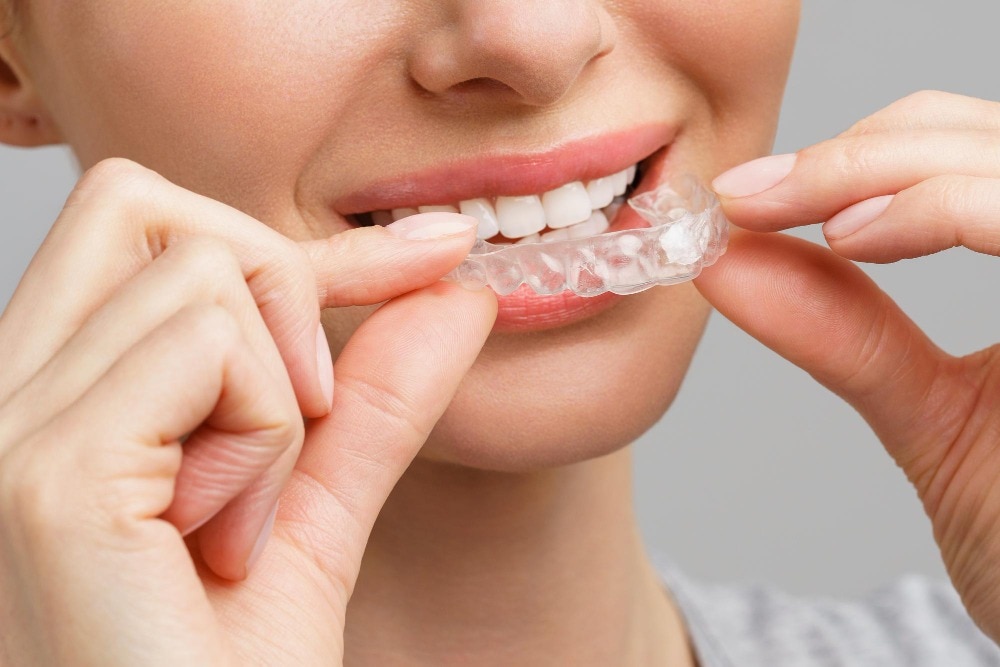
The right aligner plan depends on whether your problem is limited tooth movement, a lack of space, or a mismatch between the jaws. By the end, you will know how crowding, spacing, rotations, protrusion, and bite problems are assessed, when aligners need attachments or other appliances, and when braces or jaw-focused treatment deserve consideration.
Key takeaways
- Match treatment to the movement causing the problem, not appearance alone.
- Ask how clear aligners for crowded teeth will create space safely.
- Confirm the bite problem’s cause before choosing clear aligners.
- Compare braces, refinements, treatment scope, and retention costs before starting.
Match the aligner plan to the tooth-position problem
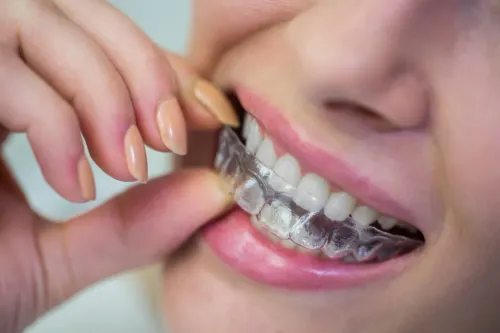
Which clear aligners are right for me depends on the movement, not just how crooked a tooth looks. Limited or mild-case plans suit mild crowding, small spaces, and simple tipping. Comprehensive in-office treatment fits moderate crowding, several arches, or multiple movement types.
Small spacing corrections are more predictable than severe rotations, large movements, or root control.
| Problem | Suitable plan | What can change the plan |
|---|---|---|
| Mild crowding or spacing | Limited aligners | Small tipping and minor arch changes are usually predictable |
| Moderate crowding or protruding teeth | Comprehensive aligners with attachments, elastics, or bite ramps | Several movements may need refinement trays and close monitoring |
| Severe crowding or displacement | Comprehensive treatment, fixed braces, extraction planning, or a combined plan | Space and safe root movement may exceed aligner control |
| Rotated rounded tooth | Attachments with comprehensive aligners, refinements, or fixed braces | Rotation is difficult because a smooth, rounded tooth gives a tray little grip |
| Tooth needing bodily movement | Comprehensive aligners with attachments or fixed braces | Moving the crown and root together demands stronger three-dimensional control |
A protruding tooth caused by position may respond to aligners; pronounced overjet from a jaw-size mismatch will not be solved by straightening the crowns alone. Likewise, crowding from teeth sitting in the wrong positions differs from a narrow upper or lower jaw, which may require specialist expansion or broader orthodontic treatment.
An examination must separate a dental problem from a skeletal discrepancy before you choose trays.
How clear aligners for crowded teeth create enough room
Crowding is solved by making room and controlling where teeth go—not by stretching every arch outward. A plan for clear aligners for crowded teeth can combine several small movements, with attachments that give trays a grip on teeth needing rotation, tipping, or more controlled movement.
| Method | What happens in practice | Main limitation |
|---|---|---|
| Limited expansion | Teeth move outward within the available supporting bone | It cannot safely widen a genuinely narrow jaw without specialist assessment |
| Posterior movement | Selected back teeth move backward to free space at the front | Root control and anchorage may need refinement scans and extra trays |
| Interproximal reduction | A prescribed, small amount of enamel is removed between selected teeth | It is planned enamel reduction, not indiscriminate filing |
| Extraction planning | Selected teeth are removed when the space shortage is too large | Fixed appliances or a combined approach may control the result better |
Interproximal reduction means carefully removing a small, prescribed amount of enamel between selected teeth. The clinician measures where and how much to reduce; filing teeth indiscriminately can create sensitivity, shape problems, or excessive enamel loss. Mild and moderate dental crowding often responds to a combination of movement, limited expansion, reduction, and attachments.
Severe crowding can require extractions or fixed appliances. A narrow upper or lower jaw is different from teeth positioned too close together: it is a skeletal or arch-width problem that may need specialist expansion or treatment of the underlying jaw relationship, not simply tighter trays.
A digital simulation is a plan, not a guarantee. Roots, bodily movement, rounded-tooth rotations, and posterior movement are less predictable than simple tipping, so refinement scans and additional trays may be needed.
Choose aligners for the bite problem only when its cause fits
Clear aligners for bite problems suit a bite caused mainly by tooth position, not a mismatch in jaw size or growth. An examination must distinguish a dental problem from a skeletal one before trays are prescribed; correcting visible tooth position can leave the jaw problem unchanged.
| Problem | Aligner approach | Boundary |
|---|---|---|
| Mild dental deep bite or overbite | Programmed intrusion, extrusion, attachments, and bite ramps in sequential trays | A pronounced skeletal deep bite needs comprehensive orthodontic assessment |
| Mild dental overjet | Sequential trays, attachments, and elastics can reposition the front teeth | A pronounced skeletal overjet may need jaw-focused treatment |
| Anterior open bite | Programmed extrusion, attachments, and elastics can close a tooth-based gap | A skeletal or growth-related open bite needs broader assessment |
| Mild dental crossbite | Attachments and staged tooth movement can correct selected front-tooth crossbites | A narrow upper jaw causing posterior crossbite may need specialist expansion |
| Complex bite discrepancy | Aligners may support a supervised comprehensive plan | Marked asymmetry or growth-related discrepancy can require growth modification in children or orthognathic surgery |
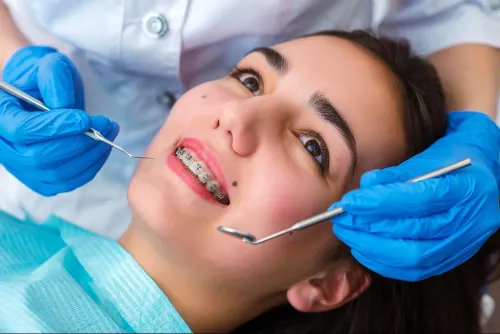
The required movement matters in three dimensions. Fixed braces provide more predictable control for complex vertical movements, severe rotations, root torque, or large tooth movements, but they do not automatically rule out aligners; attachments, elastics, bite ramps, and refinements can extend their use. Choose the method after identifying the cause, not just the visible bite.
What must be checked before an aligner plan is approved
1. Review your medical and dental history, including medicines, previous orthodontic treatment, jaw symptoms, trauma, missing teeth, and restorations. Record photographs, an intraoral examination, digital scans or impressions, and bite records showing how the upper and lower teeth meet.
2. Assess the gums and supporting tissues before planning movement. Check bleeding, pocket depths, gum recession, tooth mobility, plaque, inflammation, and bone support. Moving teeth through inflamed or poorly supported tissues can worsen periodontal problems.
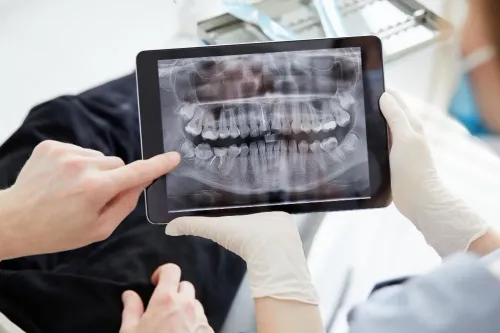
3. Use radiographs when clinically indicated. A scan shows crowns and their planned positions, but it cannot diagnose decay, measure gum support, locate impacted teeth, show root position, confirm missing teeth beneath the gum, or reveal every bone condition.
4. Treat problems that make movement unsafe or unpredictable before approving trays:
- Active cavities
- Untreated gum disease or significant inflammation
- Poor oral hygiene
- Loose teeth
- Significant enamel wear
- Impacted teeth
- Defective restorations
- Restorations that are strategically important for tooth stability or the bite
5. Evaluate each tooth’s root position, the supporting bone, eruption status, jaw relationship, and the amount of movement it can safely make. This separates a dental problem from a skeletal one and identifies movements that need attachments, additional imaging, fixed appliances, or another plan.
6. Keep maintenance in the plan. Aligners do not replace brushing, interdental cleaning, examinations, fillings, gum treatment, or restoration care; covering plaque-bearing teeth without cleaning them can worsen disease.
Compare aligner types, braces, refinements, and retention before choosing
An aligner plan can be limited, comprehensive, corrective, or retentive. The right choice depends on the movements required, not how clear the tray looks.
| Type | Practical role | Main trade-off |
|---|---|---|
| Comprehensive in-office sequence | Treats several teeth, arches, or movement types | More visits, trays, and possible refinements |
| Limited or mild-correction plan | Handles small spacing or minor alignment changes | Unsuitable for complex bite or root movements |
| Refinement aligners | Correct teeth that have not tracked as planned | May add time and fees unless included |
| Pre- or post-braces aligners | Completes selected movements before or after fixed treatment | Requires coordination between treatment stages |
| Retention aligners | Holds the result after active treatment | Continuing wear is necessary |
Clear-aligner treatment is not always tray-only care. Attachments, elastics, bite ramps, and temporary anchorage can provide grip, bite opening, or extra force.
Ask during a clear aligners consultation in Diva:
- What is the diagnosis, and which movements are realistic?
- Would braces or extraction-based treatment control this case better?
- How many refinements are likely, and are they included in the total fee?
- How often will monitoring occur, what risks apply, and what happens if a tray stops fitting?
At Sai Dental, Implant And Orthodontic clinic, these answers require an examination, photographs, bite records, scans, and radiographs when indicated; remote or scan-only approval cannot assess roots, gums, decay, or jaw relationships.
Aligners demand prescribed wear and prompt reinsertion after eating and cleaning. Braces do not rely on remembering to replace an appliance. After either treatment, removable retainers, fixed retainers, or both provide continuing care because teeth can move back.
Related services
Dental Alingers Dental aligners, also known as clear aligners, are a type of orthodontic appliance used to straighten teeth and correct bite issues. View service → |
Fixed Orthodontic Treatments often referred to as braces, are dental appliances used to correct misaligned teeth and jaws. View service → |
Frequently asked questions
Which clear aligners are right for me?
Choose based on the movement required. Limited plans suit mild crowding, small spaces, and simple tipping; comprehensive treatment suits moderate crowding, several arches, or multiple movement types.
How do clear aligners for crowded teeth create enough room?
An orthodontist may combine controlled tooth movement with planned space creation. Ask which teeth will move, how much space is needed, and how the plan protects your bite and gums.
Are clear aligners suitable for all bite problems?
Clear aligners for bite problems fit only when the bite issue’s cause and required movements can be managed predictably with aligners. The examination must identify whether tooth position, jaw growth, or another factor drives the problem.
What should be checked before approving an aligner plan?
Review tooth and gum health, bite records, photographs, scans or impressions, planned movements, treatment scope, refinement policy, and the retention plan before starting.
Keywords