
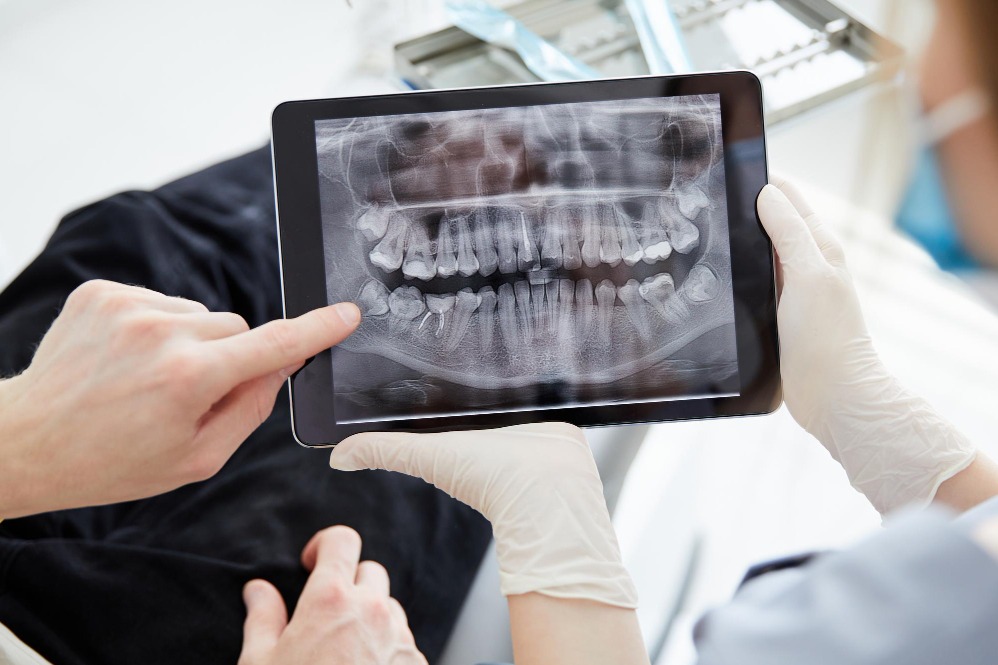
A dentist can learn a great deal by examining the mouth directly, but some important structures are hidden beneath the gums or inside the teeth. Dental imaging provides additional information that may help confirm a diagnosis and plan appropriate treatment.
For patients advised to undergo a Digital Dental X-Ray in Diva Thane, understanding why the image is needed can make the diagnostic process clearer.
What Can a Dental X-Ray Show?
The exact information depends on the type of dental image being taken.
Dental X-rays may help a dentist evaluate:
- Areas between teeth that are difficult to inspect directly
- Tooth roots
- Bone surrounding teeth
- Certain infections
- Impacted teeth
- Developing teeth
- Existing restorations
- Root canal-related concerns
- Missing-tooth areas during treatment planning
An X-ray does not replace a clinical examination. Instead, the two sources of information are interpreted together.
Why Are X-Rays Used for Toothache?
Pain does not always reveal its exact source.
A patient may feel discomfort in one area even when the underlying problem involves a neighboring tooth. Some changes around the root or supporting bone cannot be seen by simply looking inside the mouth.
Imaging can provide additional information that helps the dentist decide whether the tooth requires a filling, root canal treatment, extraction, periodontal care, or another approach.
Are X-Rays Useful Before Wisdom Tooth Removal?
Yes, imaging can be particularly valuable when assessing wisdom teeth.
A visible portion of a wisdom tooth does not show how its roots are positioned beneath the gums. An X-ray can help evaluate the tooth's orientation, root anatomy, surrounding bone, and relationship to neighboring structures.
This information assists with treatment planning.
What About Dental Implants?
Implant treatment also requires careful assessment of the proposed site.
Imaging may form part of the evaluation of available bone and nearby anatomical structures. The exact imaging required depends on the patient's individual treatment needs.
Dental implant planning should therefore involve more than simply measuring the visible gap left by a missing tooth.
Does Every Dental Visit Require an X-Ray?
No.
Imaging should be based on clinical need rather than automatically performed at every appointment. A dentist considers symptoms, examination findings, previous dental history, treatment requirements, and the information needed for diagnosis.
Some patients may require imaging at one stage of treatment while others may not.
Why Digital Imaging Is Useful in Dental Care
Digital systems allow dental images to be viewed promptly on a screen, making it easier for the dentist to examine relevant structures and explain findings to the patient.
From the patient's perspective, one of the practical benefits is being able to see what the dentist is discussing.
When a dentist points out the location of a cavity, impacted tooth, root, or another finding on the image, treatment recommendations can become easier to understand.
Ask What the Image Is Being Used For
Patients should feel comfortable asking why a particular X-ray has been recommended and how its findings may affect treatment.
Diagnostic imaging is most useful when it answers a specific clinical question.
At Sai Dental, Implant and Orthodontic Clinic, digital dental imaging may be incorporated into assessment when clinically relevant for patients in Diva and the wider Thane region of Maharashtra.
Whether the concern involves tooth pain, root canal evaluation, wisdom teeth, orthodontic planning, or replacement of missing teeth, accurate diagnosis comes before treatment. Dental X-rays are one of several tools that can provide the additional information needed to make that diagnosis more complete.
Keywords